Do we have to choose every topic ourselves?
No. Lumnis researches your audience to determine which questions and priorities are worth covering. Your ICP and positioning provide the direction.
For marketing and sales teams
You define the ICP. Lumnis grows the audience, researches what buyers care about, publishes relevant content, and follows up with the people who engage. Each cycle informs the next.
Compounding audience engine
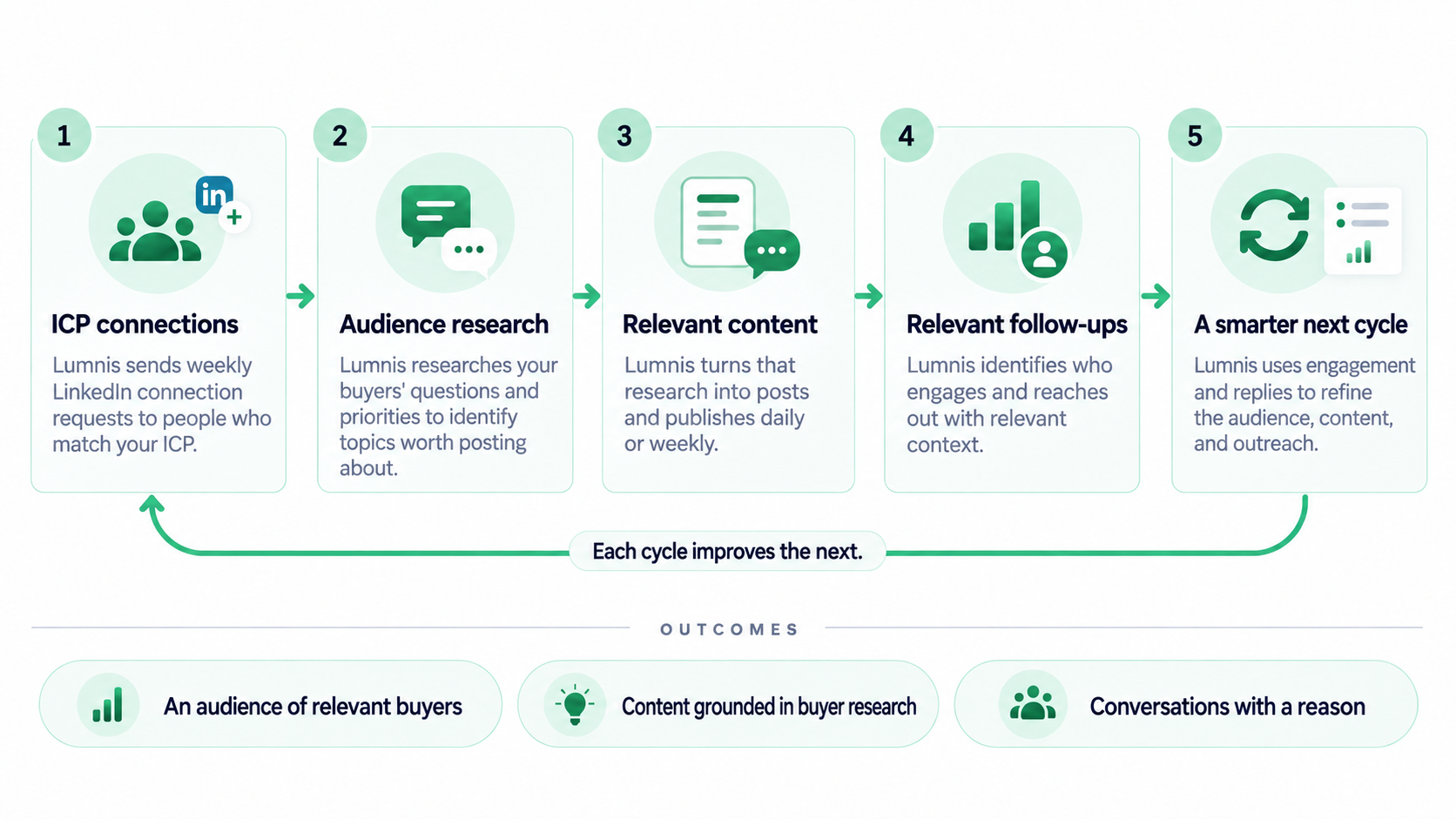
Lumnis runs the cycle
Lumnis identifies people who match your ICP and sends weekly LinkedIn connection requests from participating profiles. The audience grows around the buyers you want to reach.
Lumnis studies buyers’ questions, priorities, and conversations to identify topics worth posting about. Your team does not need to start each publishing cycle with a blank content calendar.
Lumnis creates relevant posts from the research and publishes on your daily or weekly cadence. The topics come from the audience, not a disconnected list of content ideas.
Lumnis identifies who engages and reaches out with context from the content and the person. Engagement gives the conversation a starting point; it is not treated as proof that someone is ready to buy.
Lumnis uses engagement and replies to refine the audience, content, and outreach. What resonates in one cycle becomes useful context for the next.
New connections expand who you can reach. Audience research informs what you publish. Engagement informs whom to follow up with and what to research next. That is what makes the engine compounding.
What your team receives
No. Lumnis researches your audience to determine which questions and priorities are worth covering. Your ICP and positioning provide the direction.
Audience building includes weekly connection requests. Content can publish daily or weekly, with engagement and replies feeding the ongoing research and follow-up cycle.
Marketing content reaches the intended audience, and Lumnis connects the people who engage to contextual follow-ups. Audience growth, publishing, and outreach share the same research context.